The past revealed
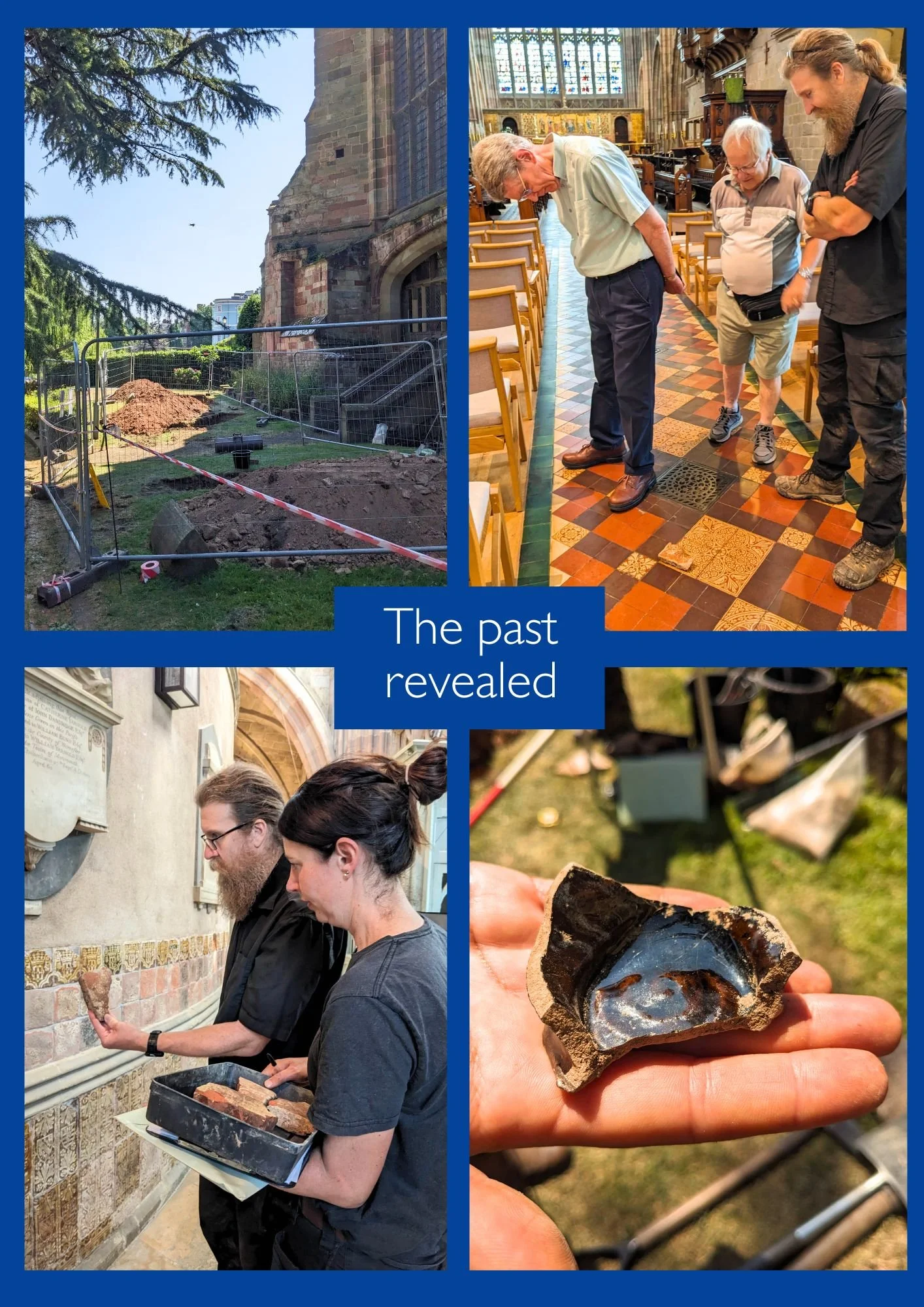
Clockwise from top left - trenches at the East end of the Priory; seeking a Mediaeval/Victorian tile match; star find - ‘Cistercian Ware’ pottery probably dating from around 1475; archaeologists Kate and Scott (Churchill Archaeology) match Mediaeval tile finds with complete tiles in the Priory.
‘We’re starting at the East end, as it’ll probably take the longest’ said Kate, archaeologist from Churchill Archaeology as archaeological investigations began, aiming to identify the most appropriate location for the new building which will house the new loos and replace the vestries which currently hide the historic features inside the Priory.
If this post had been written at the start of the week’s excavations, it would have confidently asserted that the trenches at the East end would reveal the Crypt, which was once below the Lady Chapel, both of which were destroyed around 1539, during the Reformation.
By Friday a different story appeared to emerge. Walls had been uncovered in three trenches - more or less as expected from excavation reports from 1849. Except, the Victorian plans and reconstructions show a building attached to the Priory with quite slender walls.
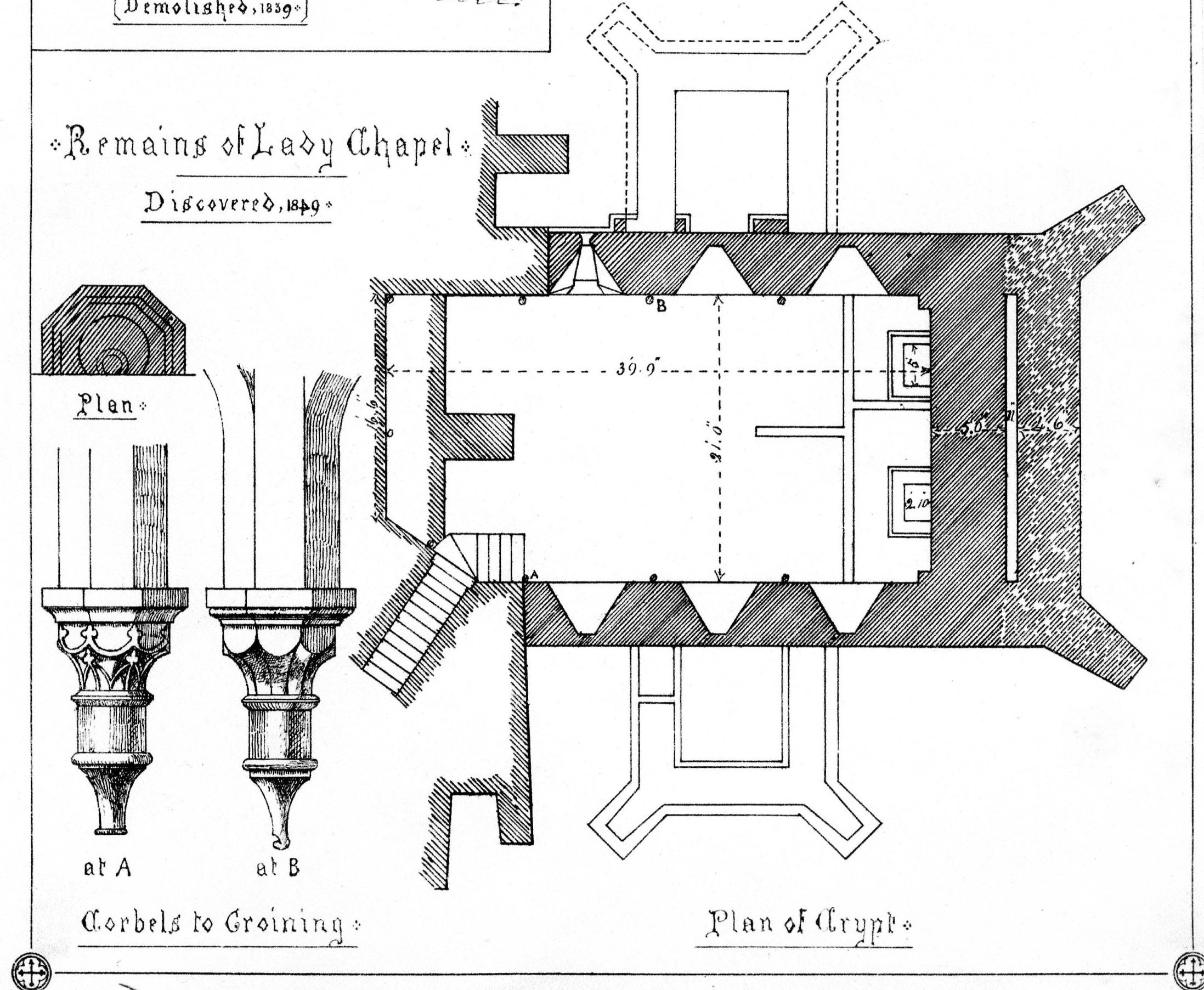
Plan of the Crypt
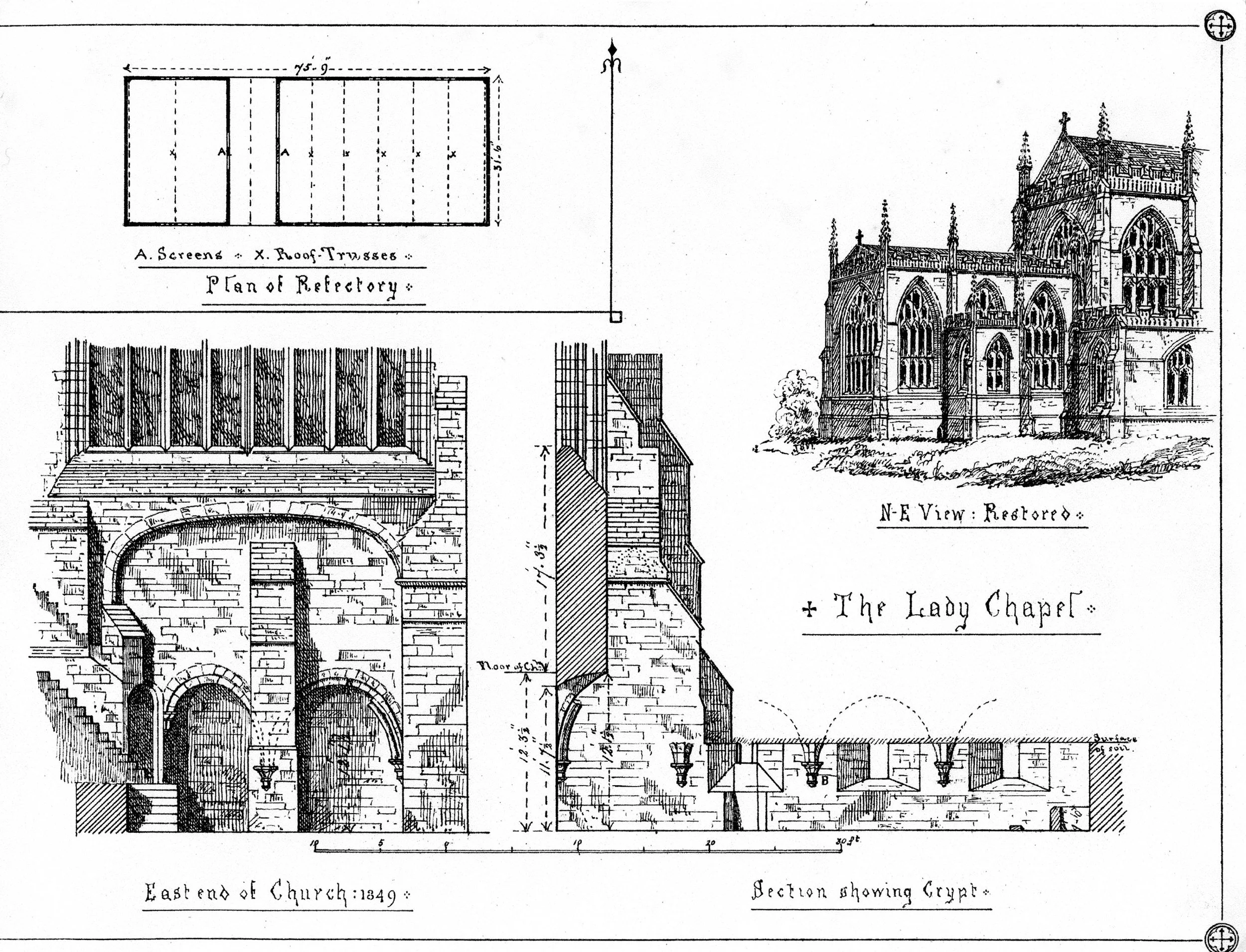
‘Reconstruction’ of the Lady Chapel from 1849
The archaeologists of today found wide walls. Much, much wider than might be expected for a single storey building above.
As so the questions began…why are the walls so thick? Why are there window splays in a Crypt, which is typically an underground structure? Could the walls belong to a much older building that was subsequently used as a Crypt? At this stage no, one knows.
And then there were the tiles. Mediaeval patterned and plain tiles, wall tiles and floor tiles, with designs matching those displayed in the Priory (with one currently elusive exception). Matching the patterned fragments with whole tiles within the Priory became a rather satisfying activity for several members of the Priory, including the Vicar, Curate, PCC Secretary and Chair of the Project Light and Space Committee. Finding a perfect match was truly thrilling, and sometimes required first finding the matching Victorian copy, and then working backwards to the Mediaeval original.
But these Mediaeval tile fragments weren’t at the Mediaeval level in the trenches. They were at the top. In the top foot or so of soil. Below that there were plain tile fragments, but the soil excavated previously by the Victorians had been well sifted and all patterned tile removed.
So how were Mediaeval tiles so close to the surface? The current working hypothesis is that the land surface was built up hurriedly, and unsifted, possibly using soil and spoil from excavations of the tile kiln where the tiles were made by the Monastery, close to the Priory.
And, within that spoil, the star find was unearthed; part of the bottom of a ‘Cistercian Ware’ mug, with its typical dark glaze and made from a different clay, not found in Malvern. Cistercian Ware - named for the Yorkshire Cistercian Monasteries where it has been excavated - was made in potteries in places including Abergavenny (Monmouthshire), Tickford (Derbyshire) and Wrotham (Kent) and had somehow made its way to Malvern. The Priory’s archaeologists currently suggest that it dates from around 1475.
All week the heat beat down on the trenches, visitors engaged with the archaeologists and the history of the Priory. On Friday the trenches were backfilled (including two trenches at the West end, which revealed nothing archaeologically interesting). Now the report writing begins, taking Project Light and Space one step closer.
Thanks to National Lottery players we will be able to develop the Project towards a Heritage Fund Delivery phase grant application in autumn 2027. Thank you!
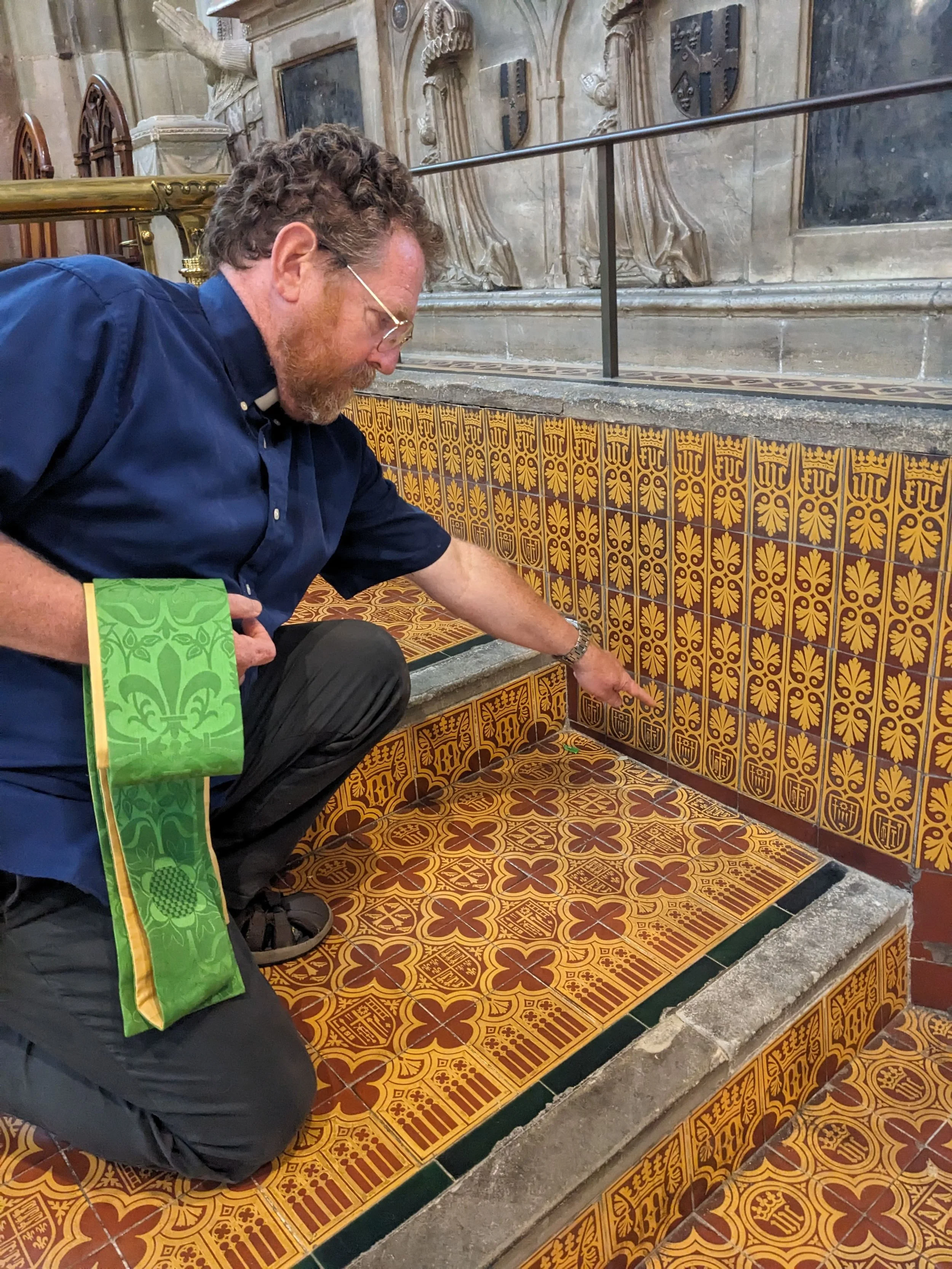
Victorian copy of a Mediaeval tile design located!